Southern Africa is one of the most natural markets on earth for solar security cameras — and one of the easiest to get wrong. In Mozambique, Malawi, Zambia, Zimbabwe and beyond, the combination of unreliable grid power, sprawling compounds, fast-growing 4G coverage and rising theft makes the case for solar-powered, SIM-connected cameras almost by itself. But the same regional realities that create the demand also decide which products survive: carrier bands differ from West Africa, the wet season punishes undersized batteries, and import logistics through Maputo or Beira reward buyers who plan ahead. This guide lays out what we verify with every Southern African customer before an order is confirmed.
1. Power reality: why solar is not a luxury here
Across much of Southern Africa, grid electricity is unreliable — outages and load-shedding are routine rather than exceptional, and rural sites may sit hours from the nearest reliable connection. A wired camera tied to that grid is offline exactly when it is most needed. A solar camera with a properly sized battery is immune: it charges by day, stores enough for the overcast stretch, and never appears on the electricity bill. The engineering consequence is simple but non-negotiable:
- Monocrystalline panels only. Tropical sun is strong but coastal haze and afternoon cloud are real; monocrystalline harvests 20–30% more per square centimeter and handles low light better.
- Battery sized for the wet season. Southern Mozambique's rainy months (roughly November–March) can deliver days of heavy overcast. We recommend LiFePO4 packs of 20,000mAh or more on multi-lens units — enough for 5–7 sunless days. Generic lithium-ion packs degrade fast in 40°C heat; LiFePO4 tolerates it.
- Detachable panels where mounting is shaded. Compounds with large roofed areas often force cameras under eaves; models like the MS22 let the panel sit meters away in full sun while the camera watches the gate.
2. Connectivity: check the carriers, then check the bands
In Mozambique the three mobile networks are Vodacom, Movitel and Tmcel, and 4G coverage along the Maputo–Beira–Nampula corridor is now strong enough that SIM-connected cameras work well beyond the cities. The trap is not coverage — it is the modem. LTE band support differs by country and carrier, and a camera built for another region may fall back to slow speeds or drop offline entirely on a local SIM.
- Bands common across Southern African networks include LTE B1, B3, B7, B8 and increasingly B28. These differ from the West African profile — which is one reason our Nigeria guide and this one are separate documents.
- Confirm before ordering, not after. Buy one local SIM from the carrier your customers actually use, test it in a sample unit at real installation sites, and only then commit to volume. We configure region-correct modems as standard and confirm the band list in writing with every Southern African order.
- External antennas for weak spots. Rural farms, fuel depots and border-area sites often sit at the cell edge. The MS45's external, positionable 4G antennas routinely double usable signal where internal antennas struggle.
- Data plans. Motion-triggered recording with PIR wake-up keeps consumption at roughly 2–6GB per camera per month — affordable on local prepaid data. Always-on streaming designs can burn 30GB and destroy the business case.
3. Matching models to Southern African deployment patterns
The deployment mix we see across the region — compound homes, agro-processors, shops and fuel stations, municipal projects — maps cleanly onto our range:
| Deployment | What it needs | Fit |
|---|---|---|
| Urban compound / shop front | Two-way audio, siren deterrent, compact install | MS21 dual-lens 4G |
| Family compound, yard + gate | Simultaneous multi-angle coverage | MS31 3-lens with strobe |
| Farm / agro camp | Maximum coverage, big battery, dual panels | MS41 / MS43 4-lens |
| Rural cell-edge sites | External antennas, 4G-first design | MS45 |
| Streets, plots with no lighting | Light + camera in one pole unit | MSL31 street-light camera |
For most Mozambican distributors, the winning assortment is a three-tier stack: an affordable 2-lens entry model, the MS31-class 3-lens best-seller, and one 4-lens flagship for farms and industrial compounds. That covers the price ladder without overlapping SKUs.
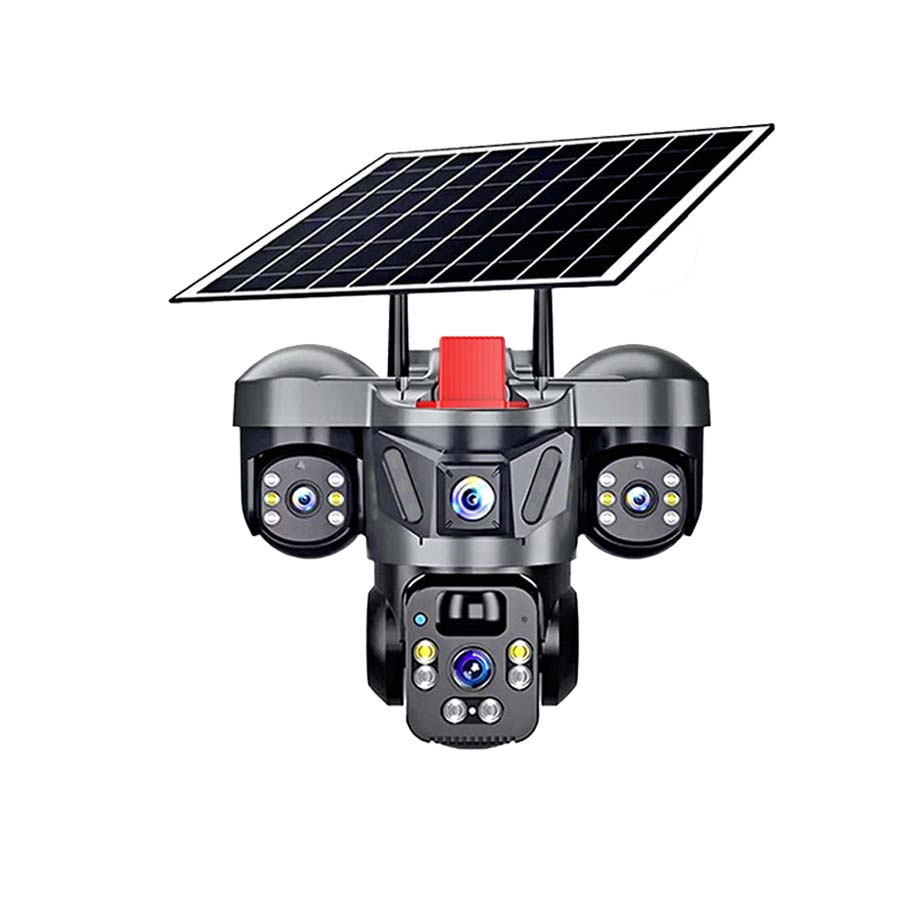
Regional best-seller: MS31 3-Lens Solar PTZ with Strobe
Three simultaneous lenses, PIR + AI detection, siren and strobe deterrent — the configuration our Southern African distributors reorder most often.
View MS31 Specs Ask for Mozambique-ready configs →4. Importing: plan the logistics before the deposit
Southern African importers who get burned usually get burned on logistics, not on product. Four things to settle with your supplier early:
- Incoterms. We quote FOB Shenzhen or CIF Maputo/Beira as standard, which keeps your clearing agent, duty position and onward trucking in your own hands — usually the cheapest route once you import regularly. If you would rather not manage logistics, our team can coordinate door-to-door delivery through our own forwarder on request; it is arranged case by case, not a standing offer.
- Transit time. Sea freight from South China to Maputo or Beira typically runs 30–45 days door-to-door; budget accordingly for seasonal sales windows like the November–December retail peak.
- Paperwork. Commercial invoice, packing list, bill of lading and certificates (CE/FCC/RoHS) come standard from our side; confirm your clearing agent's requirements for Mozambique before shipment, not at the port.
- Mixed containers. Multi-model orders (see the three-tier stack above) ship in one container with per-model carton labeling so your warehouse can sort without opening boxes.
5. Selling solar cameras in this market: what wins deals
Distributors ask us what actually closes sales in the region. In order of impact:
- A live demo. One working camera at your shop or office, viewed on the customer's own phone, outsells every datasheet. Keep a demo unit on a real SIM.
- Zero running cost. No electricity, no wiring, no monthly monitoring fee — only an optional data plan. Frame it against the cost of a guard, not the cost of a camera.
- Deterrence on the device. Siren, strobe light and two-way audio let the camera answer intruders before any response team moves — a strong argument where police response is slow.
- After-sales you can stand behind. A 12-month warranty backed by spare-parts supply turns one installation into a street of referrals.
6. Five installation mistakes that create warranty returns
Half of the "camera problems" reported to us from the region turn out to be installation choices, not product faults. Train your crews out of these five:
- Mounting under the eave with the panel in shade. The camera works for two weeks on battery, then dies. If the mounting point is shaded, the panel must be detachable and relocated to full sun.
- Facing the camera into the rising or setting sun. Direct backlight blinds the sensor every morning and evening — the exact hours when compound theft peaks. Angle across the approach instead.
- Mounting below 2.5 meters. Low-mounted cameras invite tampering and give walk-by thieves a face full of siren and strobe — which is good for deterrence but bad for keeping the camera on the wall. Go higher and use the PTZ zoom.
- Testing with a different SIM than the customer will use. Covered above, worth repeating: carrier differences are the top return cause.
- Skipping the app handover. The owner who cannot open the live view on day one becomes the refund request of week two. Walk every customer through iCSee setup before you leave the site.
Frequently asked questions
Which 4G camera models work in Mozambique without modification?
Our 4G models ship with region-configured modems covering the bands used by Vodacom, Movitel and Tmcel. Confirm your target carrier when ordering and we match the modem configuration — see the FAQ on 4G bands.
Can the cameras survive coastal humidity in Maputo or Beira?
Yes. Housings are IP66-rated against driving rain and dust, and operating range covers the coastal heat. Salt-air environments benefit from quarterly housing wipes as part of normal maintenance.
Is there a Portuguese-language app interface?
The iCSee app used by our cameras supports multiple interface languages including Portuguese, which matters for end-user handover in Mozambique and Angola.
What is the minimum order to start the Mozambique market?
Many distributors start with a 20–50 unit mixed pilot to test both carriers and their sales channels, then move to container volume. Tell us your plan and we will size the starter order.
The bottom line
Southern Africa rewards buyers who respect its specifics: a wet season that punishes small batteries, carriers whose bands must be matched before shipment, and import corridors where the right freight forwarder saves more than the last dollar of unit price. Get those three right, pair them with a three-tier product ladder, and solar security cameras become one of the most defensible product lines a distributor in the region can build.